
Project Overview
Program: Infant Nursery School
Location: Obama City, Fukui, Japan
Site Area: 2,000 m²
Building Area: 743.25 m²
Total Floor Area: 684.86 m²
Height: 4.94 m
Stories: 1
Structure: Timber structure with partial steel framing
Photo by Shun Fukuda
Project Description
This project is an infant nursery school that provides childcare based on Christian values.
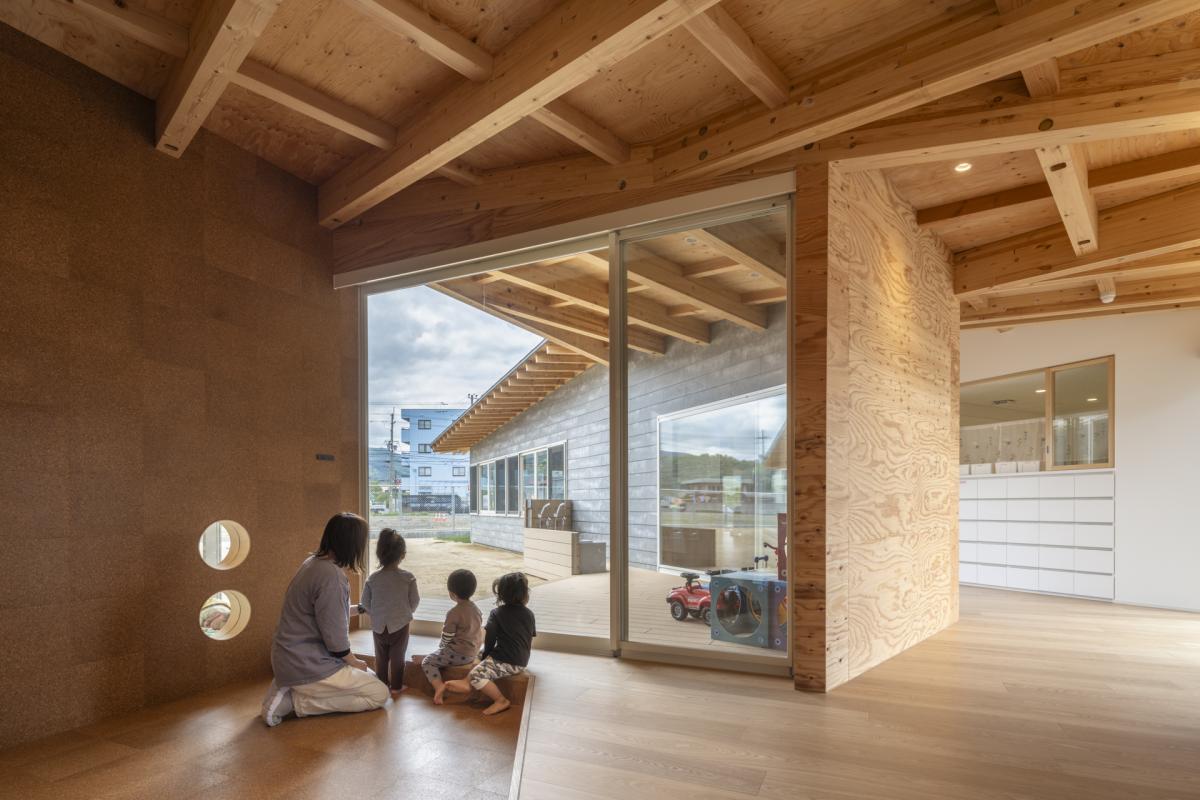
During the transition from the former facility to a new building for children up to three years old, the design aimed not only to create a safe and secure environment, but also to explore how interior spaces could offer the richness and sense of discovery typically found outdoors.
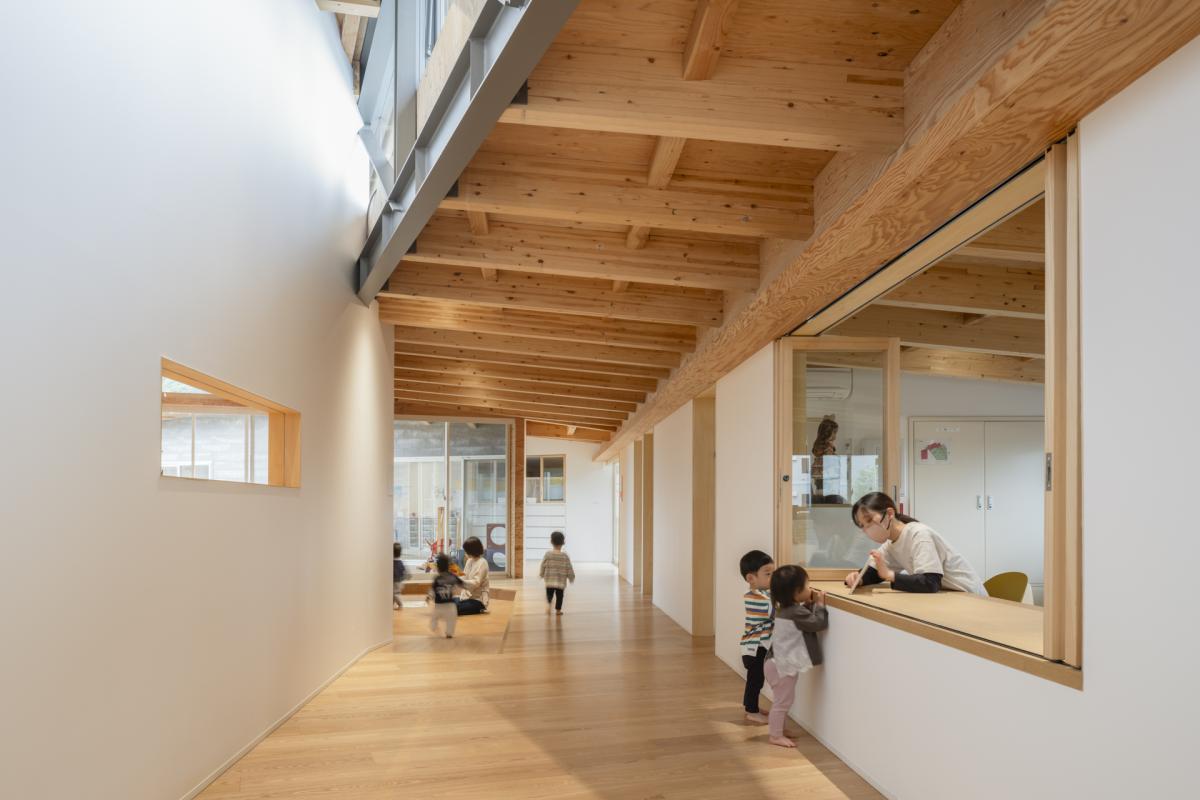
For infants and toddlers, spaces with long, unobstructed views can sometimes feel uncomfortable and unsettling. In contrast, paths with limited visibility can feel more engaging and inviting. Because caregivers remain in positions where they can supervise the children under their care, the circulation was intentionally designed with subtle turns and partial visual boundaries.
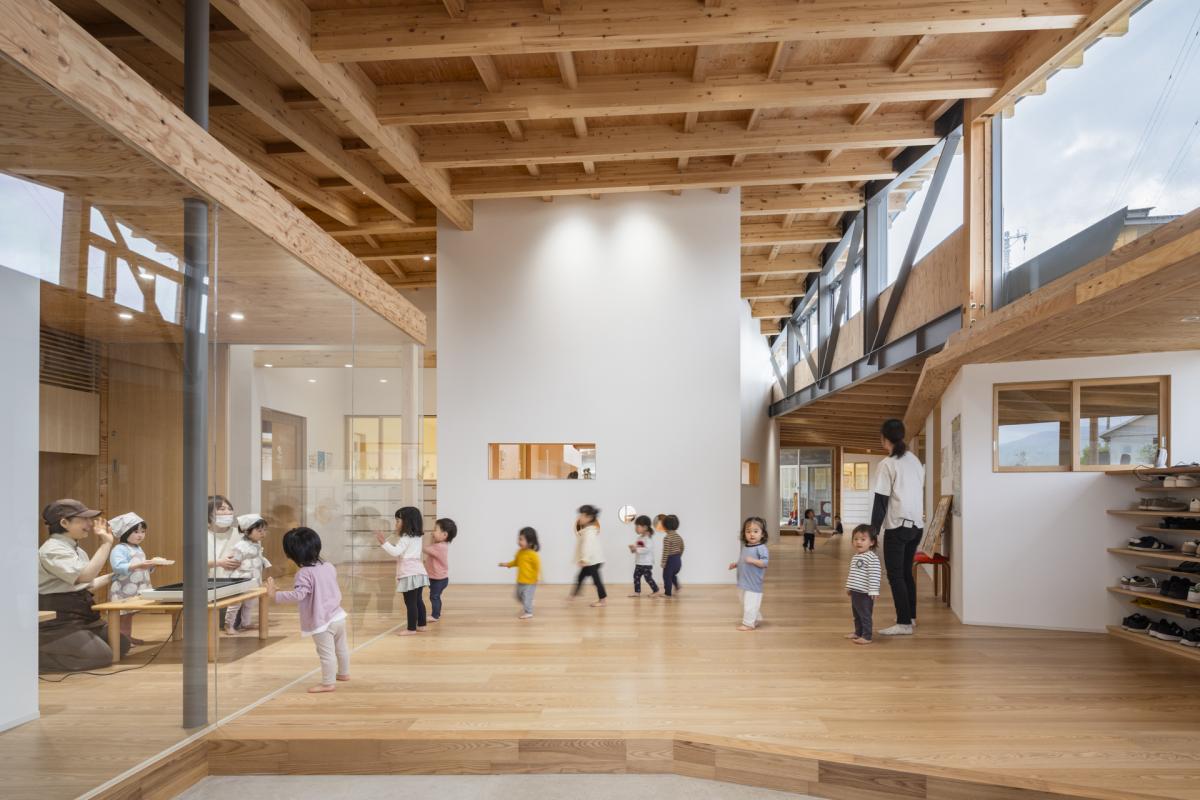
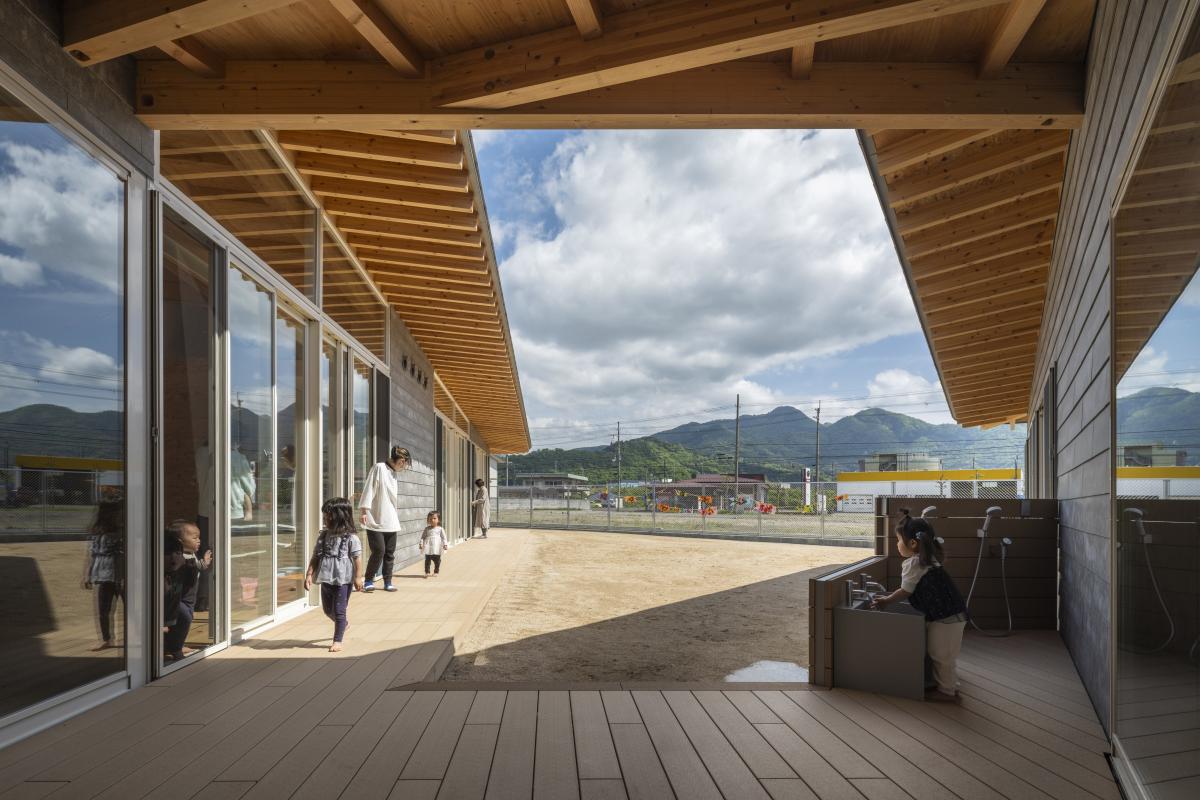
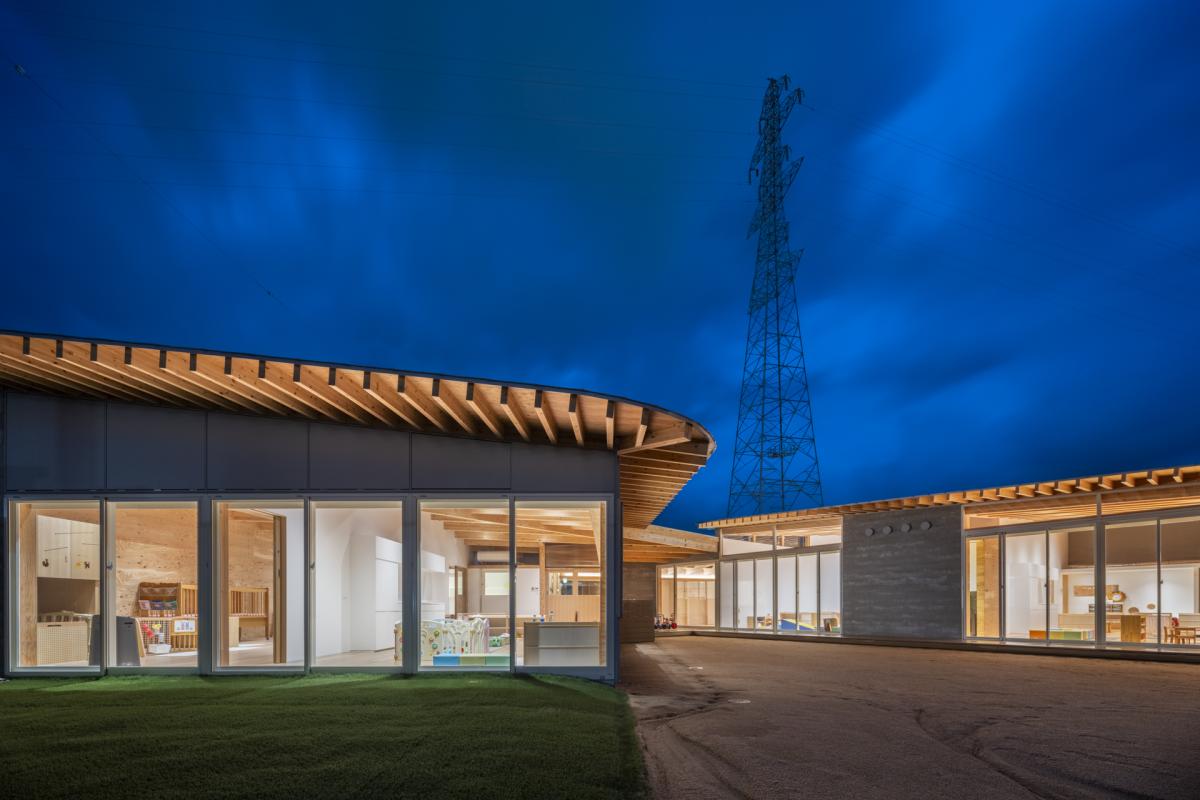
Along these paths, children encounter the courtyard and occasionally glimpse activities taking place inside the nursery rooms. In this way, the corridors were conceived not simply as passageways but as alley-like spaces where children and adults can pause, observe, and interact.
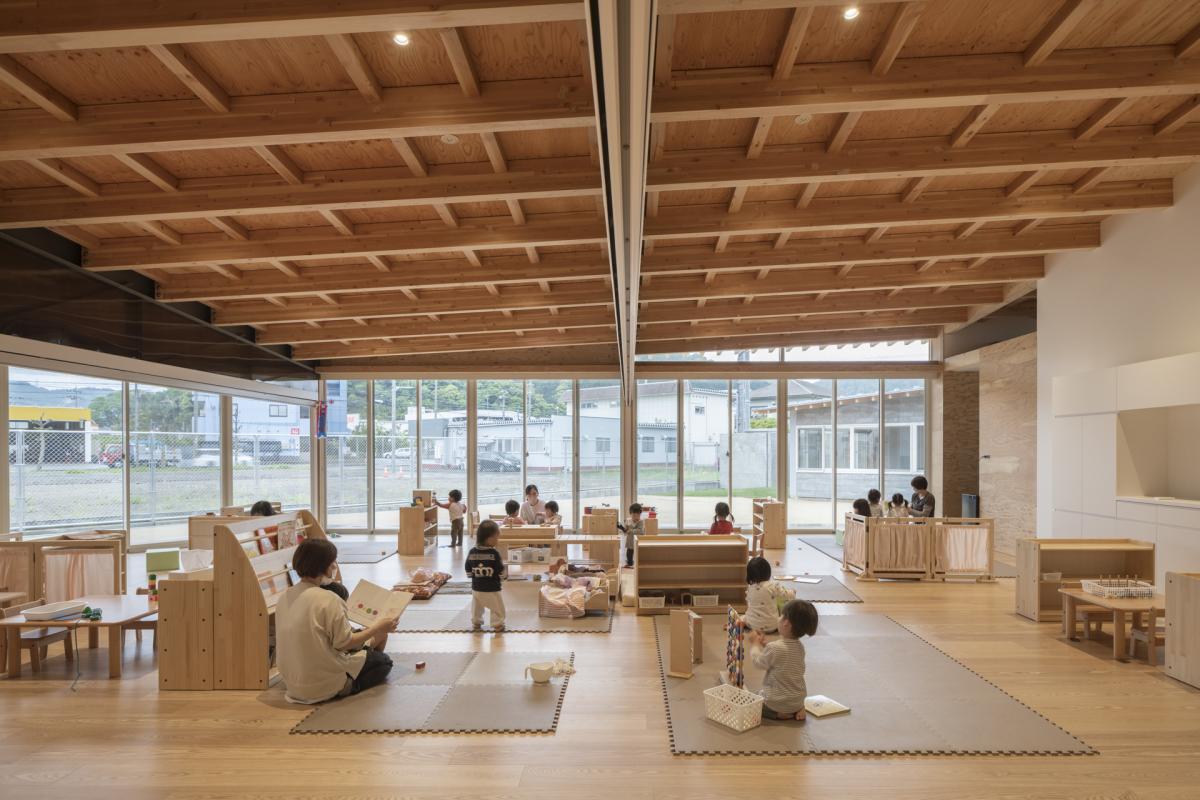
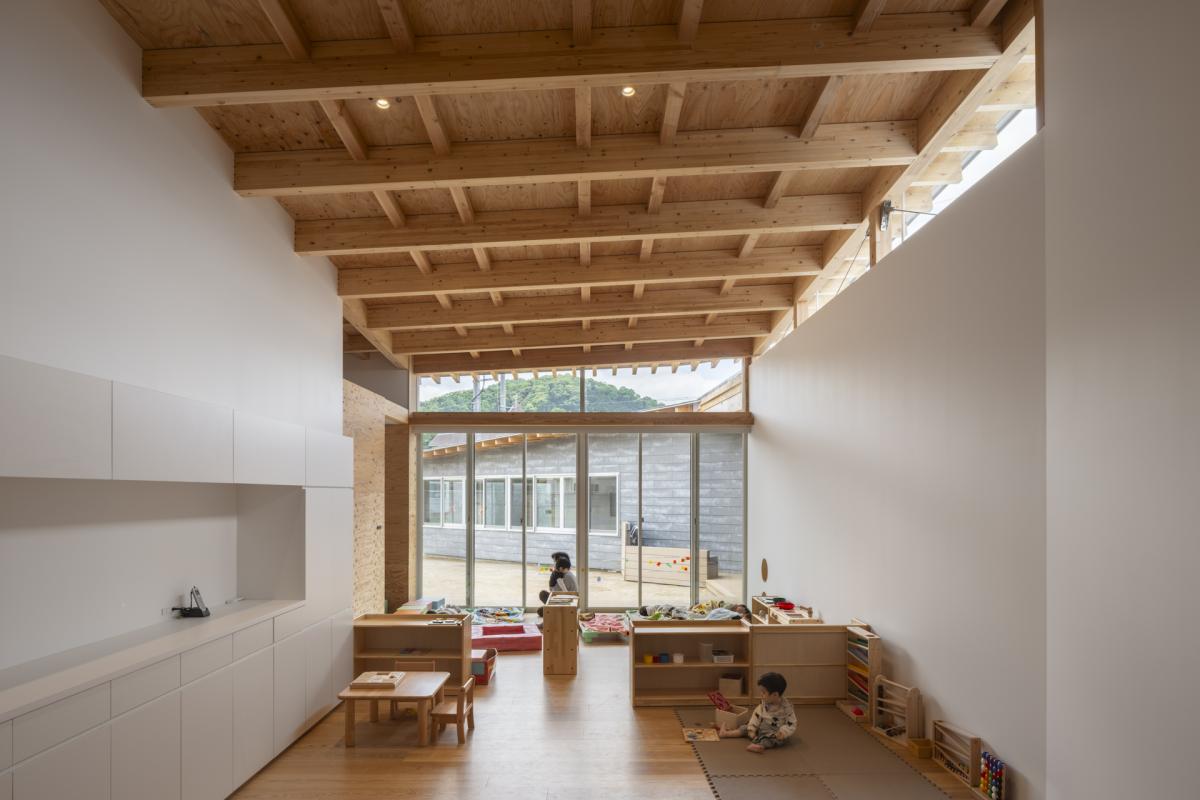
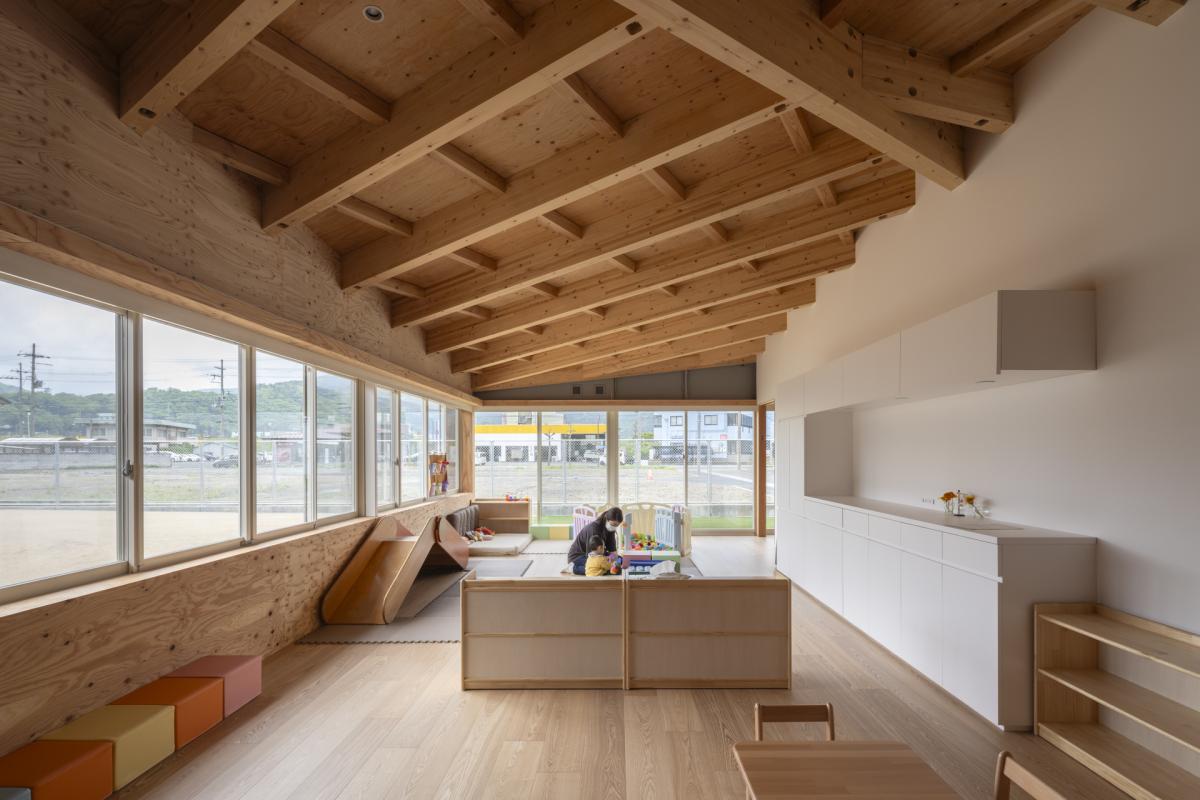
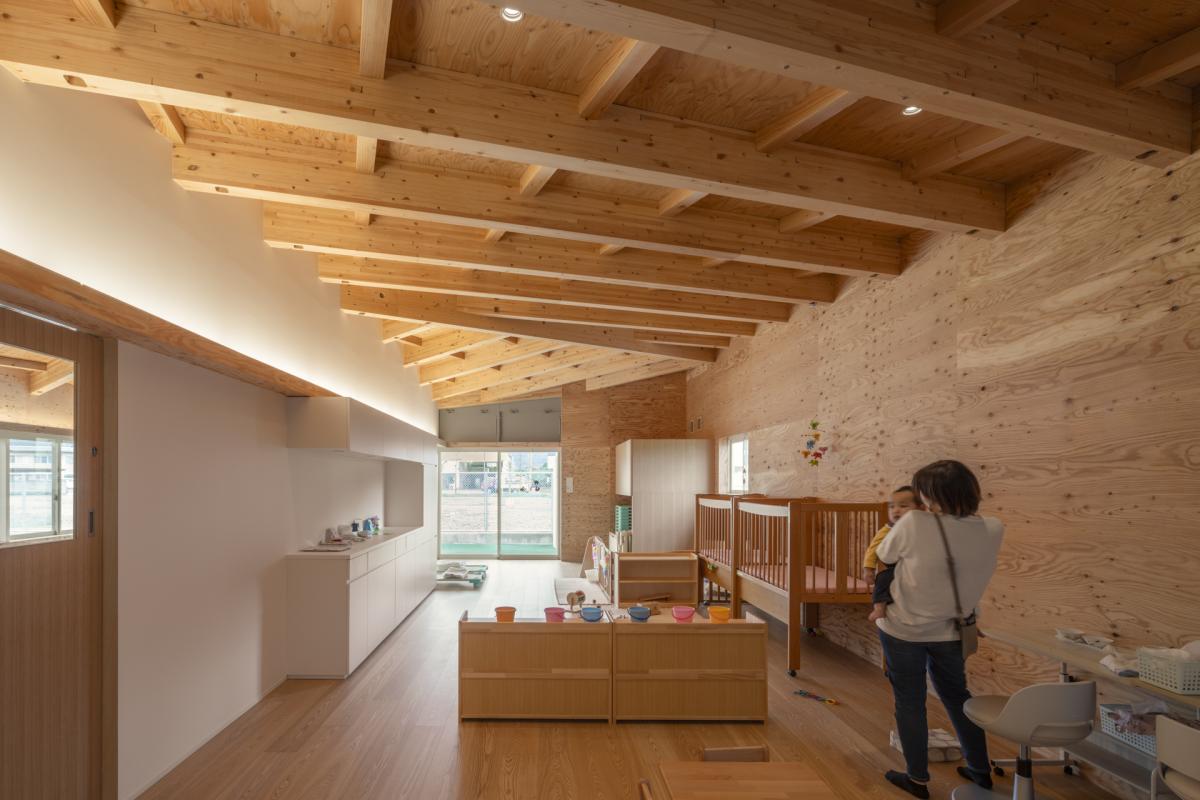
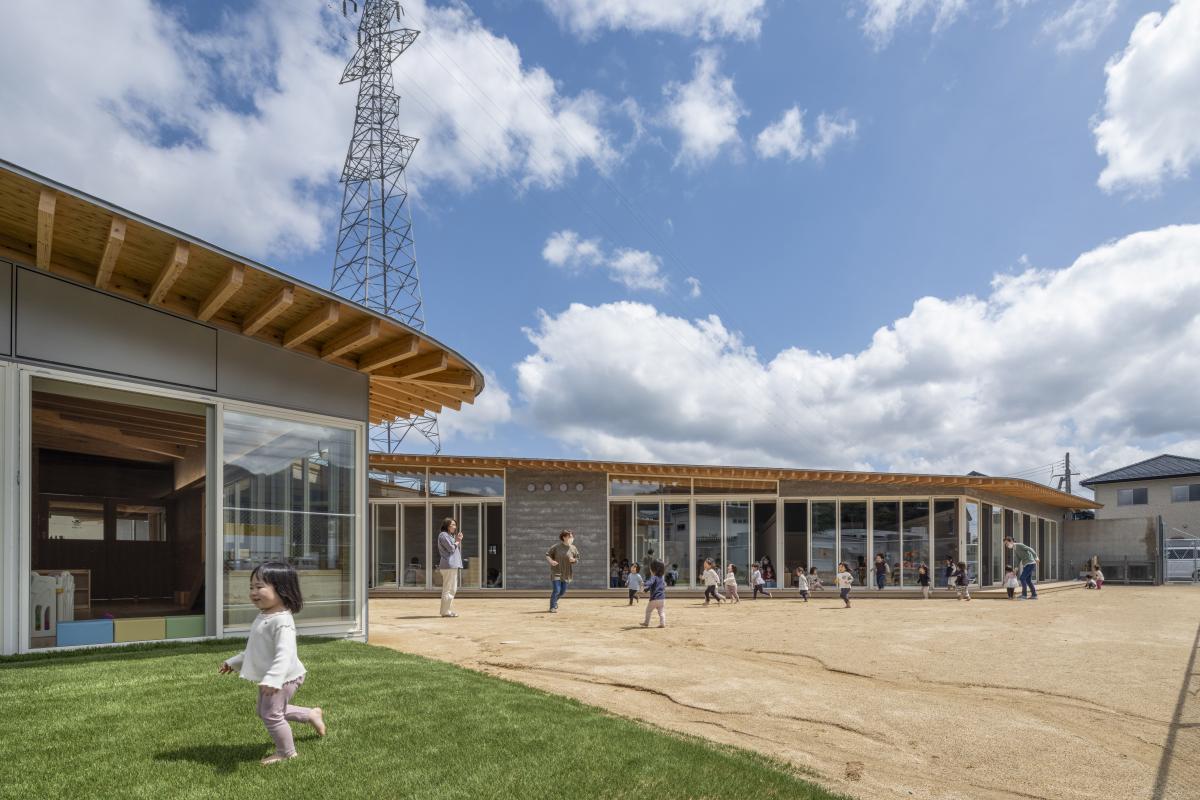
The nursery rooms were requested to be flexible so that they could be combined into one large space when necessary. These rooms are wrapped by a large roof structure that gently encloses the building. Openings between the roof volumes allow natural light to filter into the circulation spaces, illuminating the interior “alley.” The atmosphere evokes a chapel-like calmness while maintaining the warmth and familiarity of a home, creating a nursery environment where both children and adults can relax.
Design Process
The planning process was developed through a series of workshops with the nursery staff.
First, the approximate sizes of the nursery rooms—spaces with clearly defined functions—were established. Cards representing the various secondary spaces created between these rooms were then arranged and discussed. By treating both types of spaces equally, the team explored how these areas could be used and experienced in daily childcare.
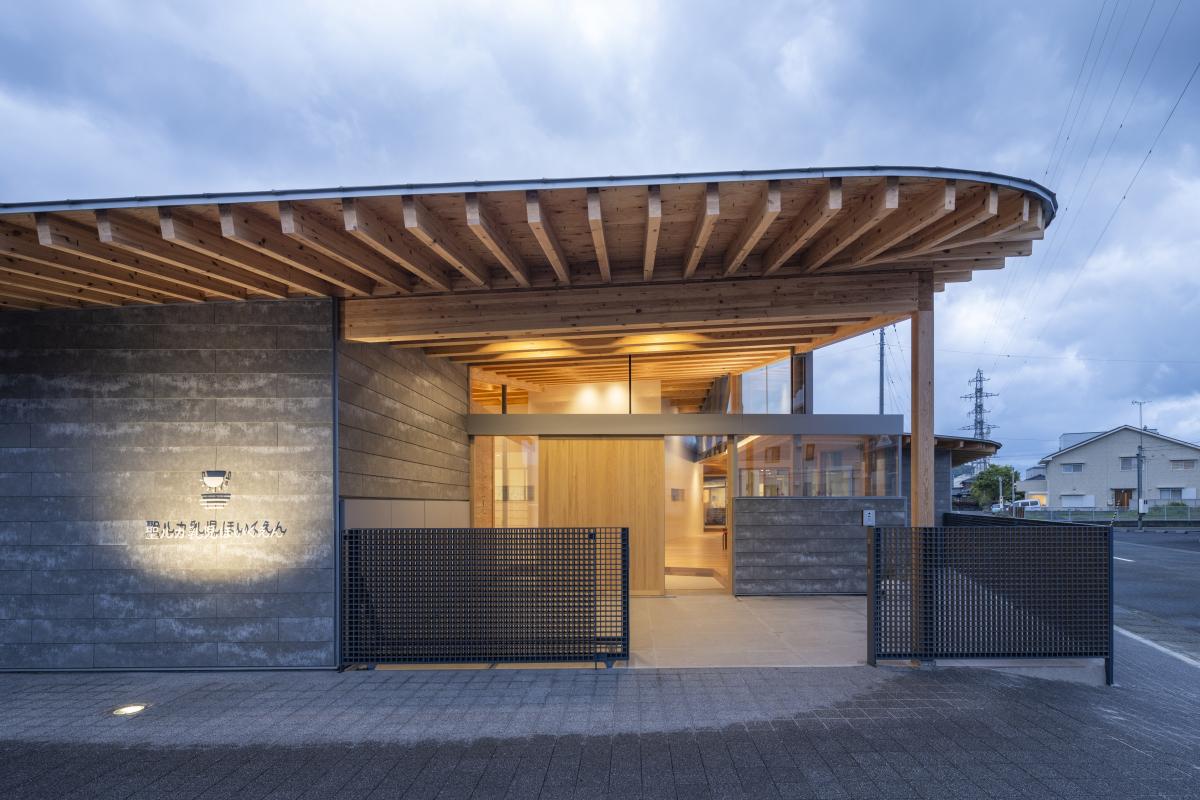
The entrance serves not only as a place for welcoming and seeing off children but also as a place to communicate the director’s philosophy of food education. In order to encourage both parents and children to develop an interest in meals, the kitchen and food preparation areas are visible from the entrance.
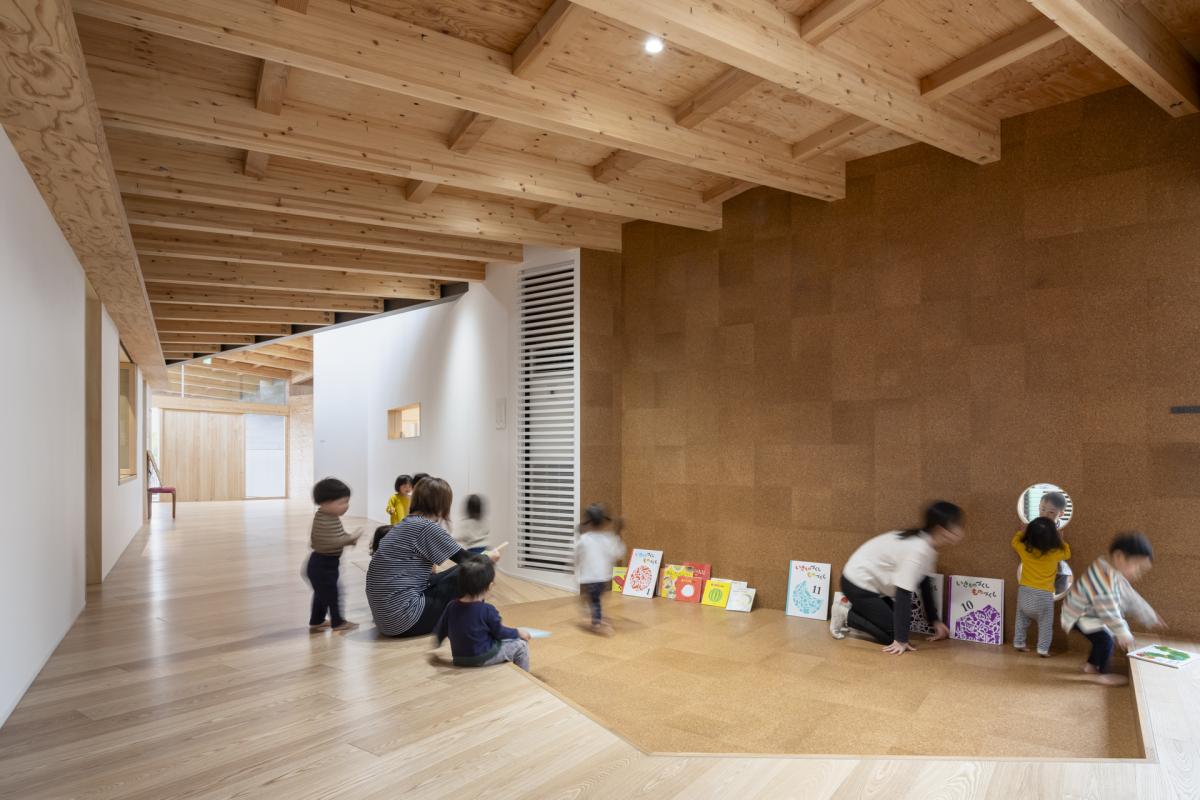
The space in front of the staff room naturally became a gathering place for children seeking interaction with caregivers. Additional ideas emerged as well: places where children can peek at other activities from the corridor, corners where they can explore picture books, and sunny spots where they can sit and look out onto the courtyard. These ideas enriched the activities taking place along the alley-like circulation space.
Architecture
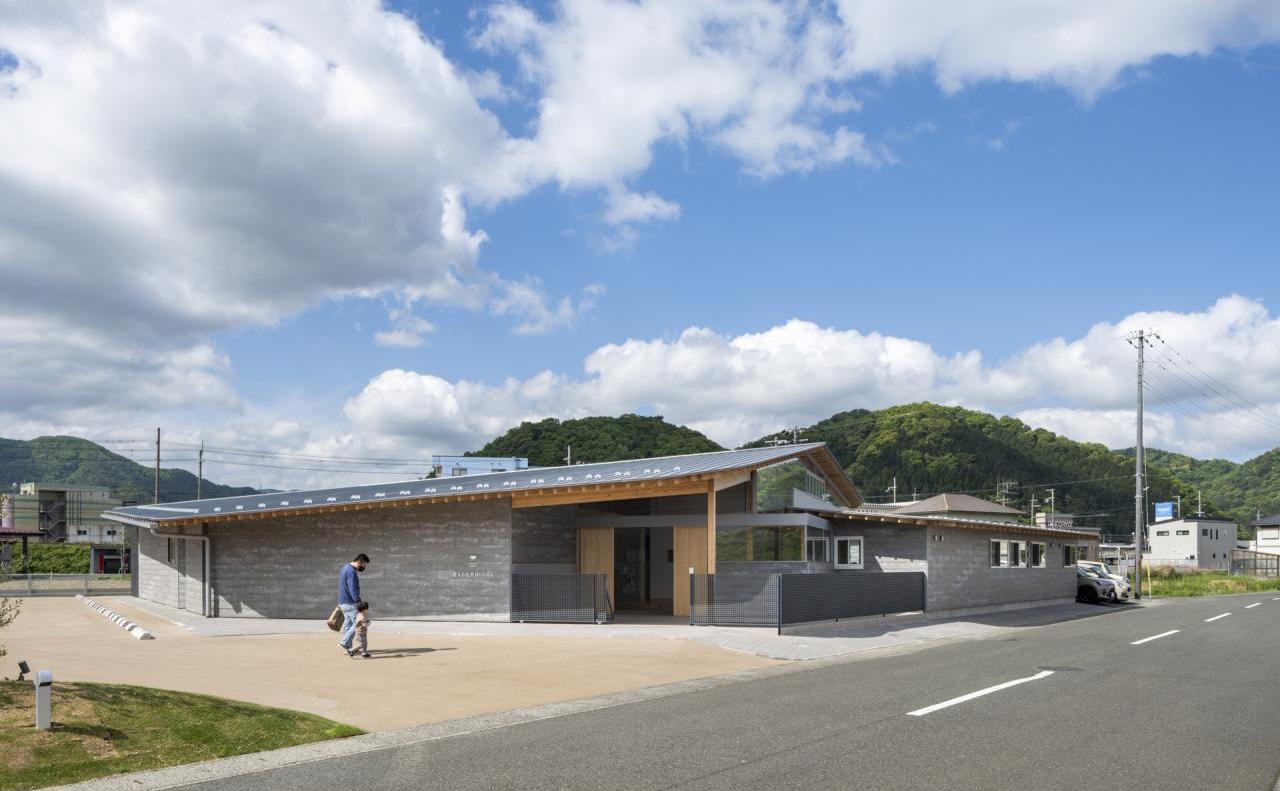
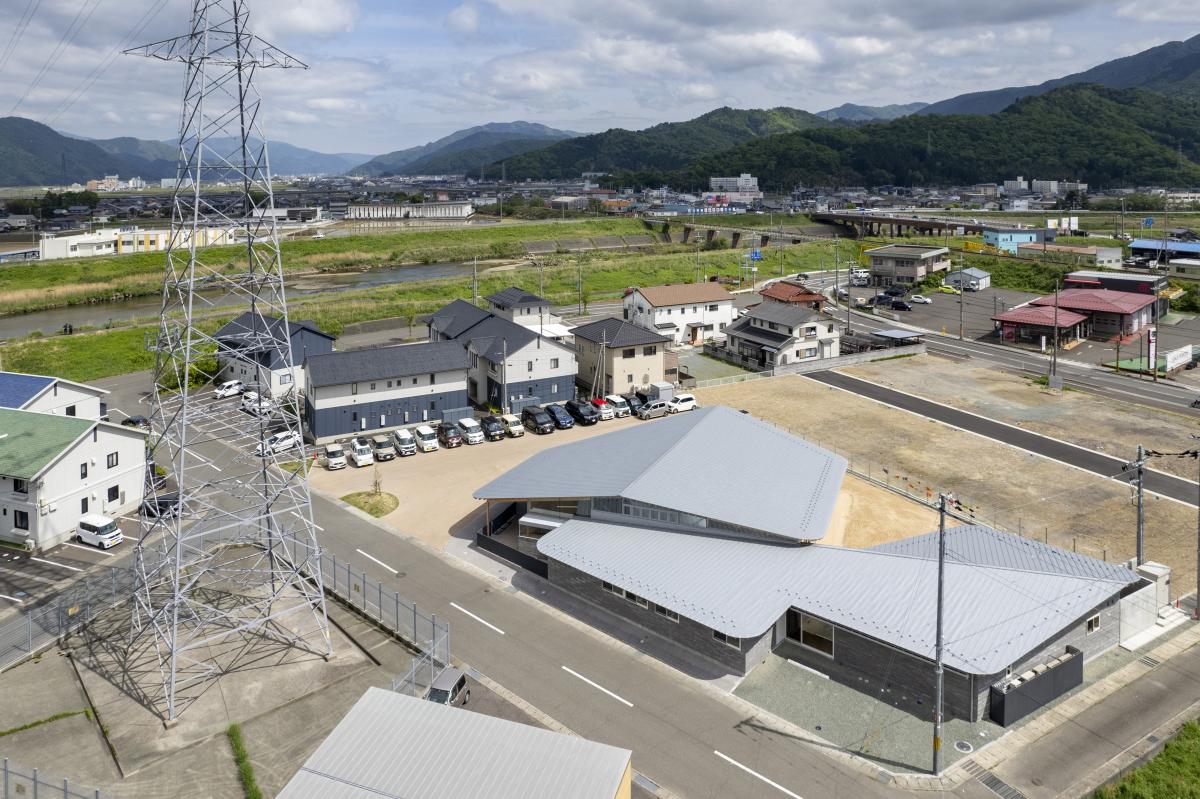
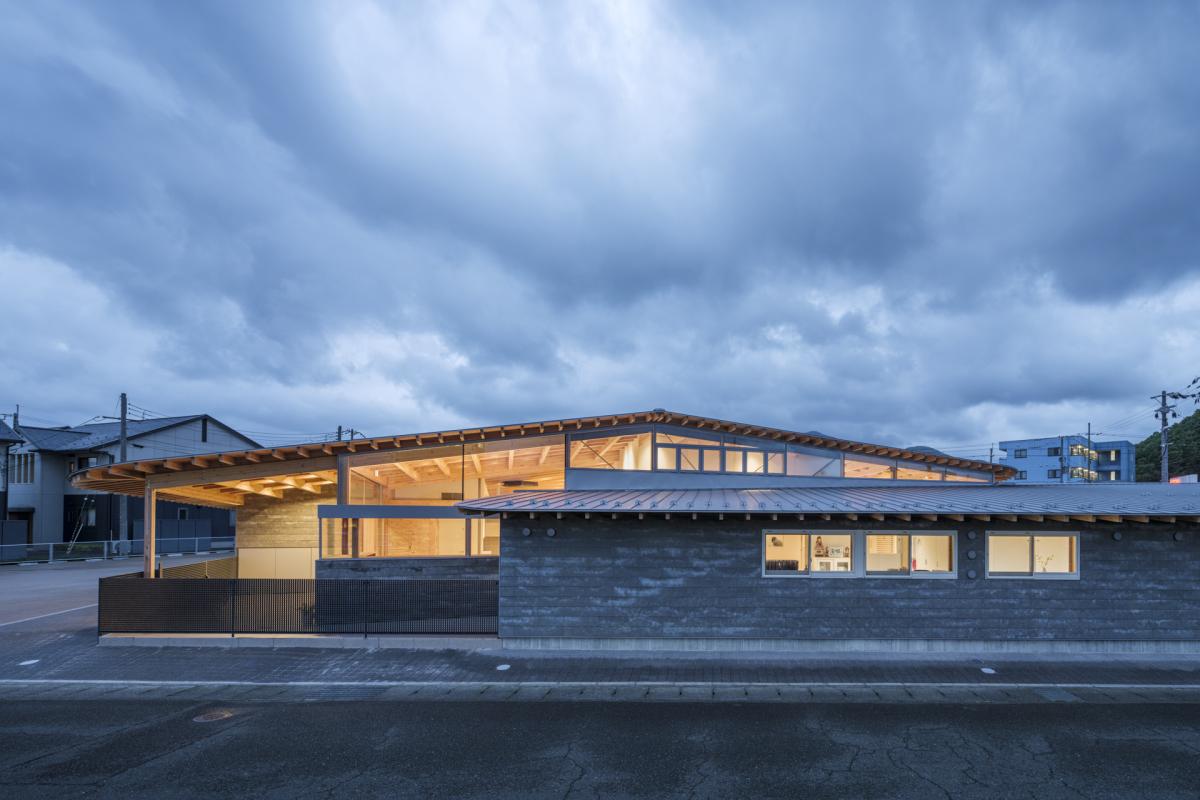
The roof was divided into larger and smaller volumes corresponding to the size of the nursery rooms. The corners of the roofs are softly rounded, giving the building a light and distinctive appearance.
The gap between the two roof layers introduces stable northern light into the interior, filling the circulation “alley” with soft natural illumination.
The primary structural system is timber, creating a warm and comfortable environment appropriate for children. However, steel trusses are used in areas beyond children’s reach, allowing the structure to be resolved efficiently without insisting on a purely timber construction.
Space and Use
The intentionally winding circulation routes create constantly shifting spatial experiences throughout the building.
At the opening ceremony, the nursery director explained both the design process and the staff’s ideas for how the spaces could be used. Because the building was developed collaboratively and incorporates the staff’s own ideas, they continue to adapt the environment—rearranging furniture and responding flexibly to the needs of the children.
The simple and generous space filled with light that we initially envisioned is now actively supporting daily childcare. Within this environment, the life of the nursery gradually unfolds through the actions and creativity of its users.